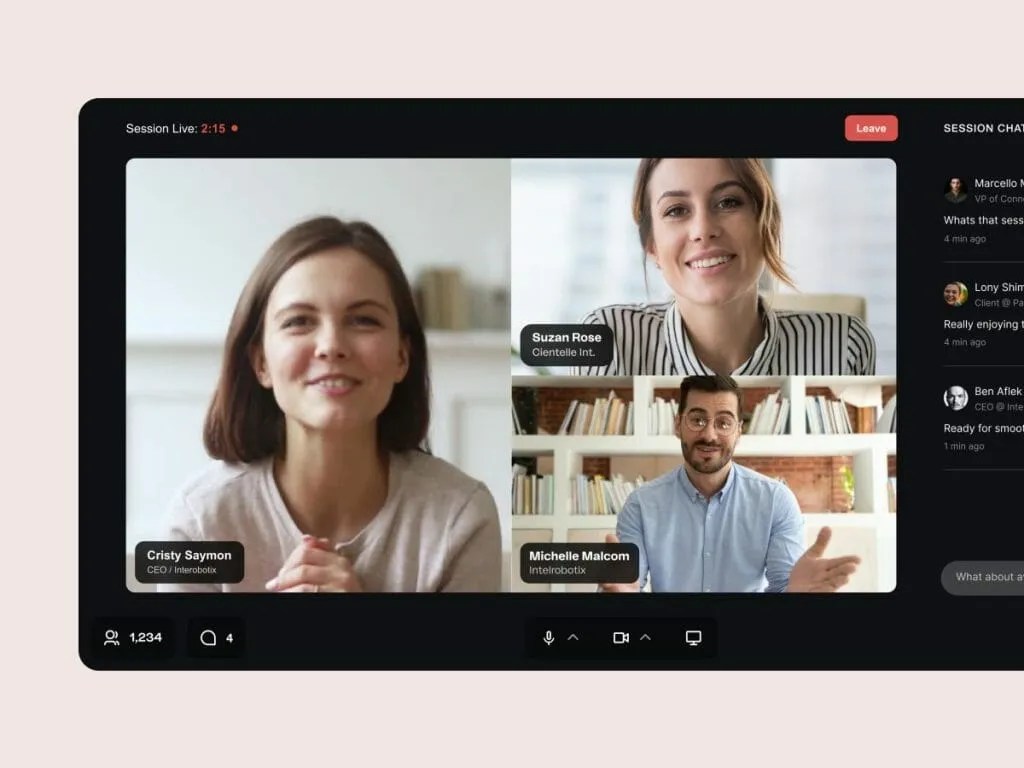
The best virtual event engagement tools have completely transformed how organizations connect with distributed audiences. Think about the last virtual event you attended—how many people actually participated? If you’re disappointed by that answer, you’re not alone. But companies deploying and seeing different results: 34% boost in registrations, 28% higher attendance, and attendees who actually stay engaged.
Today, 45% of events are hybrid or fully virtual. That means choosing the right virtual event engagement tools isn’t optional—it’s survival. 62% of virtual events miss their engagement targets completely. That’s massive wasted budget and opportunity.
Understanding Virtual Event Engagement Tools
So what exactly makes virtual event engagement tools so critical? The right tools eliminate friction, making it effortless for attendees to participate, ask questions, vote, and network.
Why does this matter? Organizations implementing to see jumps in attendee satisfaction. Post-event conversions increase 38%. People actually stay the entire event instead of multitasking. The best tools handle all of this automatically. When you layer multiple tools together with solid virtual event engagement strategies, that’s when magic happens.
Top 10 Virtual Event Engagement Tools Reviewed
1. Slido – Live Polling Excellence
Slido is one of the best virtual event engagement tools for real-time interaction. Ninety-five percent of Fortune 500 companies trust this platform. Imagine your attendees instantly voting on questions, asking things anonymously, and seeing results pop up live. That’s what Slido delivers. The word clouds look beautiful, leaderboards create friendly competition, and moderators actually control what gets asked. It’s made for driving genuine engagement without feeling forced.
Price: Free to start, $10/month for pro features.
2. Kahoot! – Gamified Engagement
Want to see virtual event attendee engagement explode? Use Kahoot. People compete, win points, climb leaderboards—it’s genuinely fun. Companies using this tool see 72% higher participation. Perfect for product launches and team training when you want things to stick.
Price: Free version works, $20/month business features.
3. Gather.town – Spatial Networking
Gather.town creates actual virtual spaces where people walk around, bump into each other, and chat naturally. Proximity-based audio means you only hear people near you—just like a real conference. It’s probably the most innovative virtual event engagement tool for networking available today. People feel like they’re actually connecting instead of sitting alone on Zoom.
Price: $7 per person/month, limited free tier.
4. Mentimeter – Beautiful Interactive Polls
Mentimeter brings presentations from “watch and zone out” to “actively involved.” Real-time polls, word clouds, audience rankings—attendees vote on phones while results appear instantly on screens. Perfect for panels where you want virtual event engagement ideas that look polished and work smoothly.
Price: Free with basics, $12/month pro access.
5. Hopin – All-in-One Platform
Hosting 10,000 people? This is the virtual event engagement tool for you. Multiple stages, networking lounges, expo booths, after-parties—it’s a complete platform enterprise teams love. One solution handles everything instead of gluing five tools together.
Price: Custom pricing, starts $99/month.
6. Remo – Table-Based Networking
Remo feels like walking into a real conference. Virtual tables, attendees sitting together, natural conversations flowing. People get three times more networking connections—seriously. It’s built for virtual event engagement strategies that prioritize human connection.
Price: $50-250 depending on size.
7. Pigeonhole Live – Moderated Q&A
Ever heard of a CEO town hall generating 500+ questions? Pigeonhole makes that happen. Anonymous questions, upvoting, smart moderation—attendees ask what they really want, the best questions bubble up, leaders answer live. This is virtual event engagement done authentically.
Price: Free for small events, $99 per event.
8. Miro – Collaborative Whiteboarding
Workshops and brainstorming sessions come alive on Miro. Infinite canvases, templates that actually work, voting so the group decides together. Five hundred people voting on innovation ideas in real time—that’s how you create genuine virtual event engagement. Everyone feels heard.
Price: Free tier, $8/month teams, $16/month business.
9. Airmeet – Comprehensive Events
Professional associations connecting 2,000 people need Airmeet. Smart matchmaking finds relevant connections, speed networking works brilliantly, breakout rooms give everyone space to focus. It’s built specifically for creating meaningful virtual event engagement through actual human connection.
Price: Free for 100 people, $249/month starter tier.
10. StreamYard – Multi-Platform Broadcasting
Broadcasting to YouTube, Facebook, LinkedIn, Twitter simultaneously? StreamYard handles it perfectly. Product launches reaching 10K+ viewers across platforms—one source, multiple destinations. Professional graphics, smooth transitions, everything looks polished. It’s how you maximize reach and virtual event engagement across social channels.
Price: Free basic version, $25/month pro, $99/month business.
Proven Virtual Event Engagement Strategies
Getting real virtual event engagement requires more than just picking tools. You need strategy. First, segment your audience. Different tracks get different virtual event engagement tools. Executive session uses Pigeonhole for Q&A while the product track uses Kahoot for gamification.
Second, layer multiple engagement points. Polls, Q&A, networking, chat, breakout rooms—research shows four or more engagement opportunities boost participation 68%. One engagement point? People zone out. Multiple? They stay engaged.
Third, communicate before the event starts. Send an engagement guide explaining what tools you’re using and why. Prepared attendees participate 45% more than confused attendees. Fourth, get real people moderating—chat monitors, Q&A curators, poll watchers. Fifth, follow up after. Send recordings, attendee connections, surveys, next steps. That sustained engagement drives 38% higher conversion rates.
Measuring Virtual Event Engagement Success
You can’t improve what you don’t measure. Track participation rate—what percentage actually used your virtual event engagement tools? Target 60%+. Track dwell time—how long did people stay? Aim for 45+ minutes. Track interaction quality—polls completed, Q&A questions asked? Target three or more per person. Track networking connections—one-on-one meetings? Three or more each. Track post-event conversions—sales or partnerships from the event? Target 15%+.
Conclusion
The right virtual event engagement tools are no longer optional—they’re absolutely essential. The ten tools covered here—from Slido’s polling to Gather.town’s networking—each solve specific engagement problems.
Success doesn’t come from having the most virtual event engagement tools. It comes from strategic choices. Pick two or three that match your event type. Combine them with solid virtual event engagement strategies. Start this quarter, measure everything, then expand what works.
Frequently Asked Questions
Q1: Which virtual event engagement tool should I pick first?
Honestly? It depends what you’re doing. Webinar? Start with Slido for polls. Networking event? Go with Gather.town or Remo. Training? Kahoot works brilliantly. Conference with multiple tracks? Hopin handles everything. Pick based on your actual needs, not what everyone else uses.
Q2: Can I use multiple virtual event engagement tools together?
Totally. Most integrate really well. Combine Slido with Gather.town for polling plus networking. Add Kahoot for gamification. Pair StreamYard for broadcasting. Just don’t go crazy and confuse people. Three tools working together beats ten tools creating chaos.
Q3: How much do virtual event engagement tools cost?
Free tools that work? Slido basic, Mentimeter basic, Miro free tier. Mid-range? $10-50 monthly gets solid functionality. Enterprise? $99+ per month, often custom pricing. Budget matters, but remember what you’re getting—better attendance, more engagement, higher conversions.
Q4: How do I boost virtual event attendee engagement using these tools?
Use multiple engagement touchpoints, combine synchronous and asynchronous activities, train people before the event starts, have real moderators working live, and follow up afterward. Those five things matter more than picking the “perfect” tool.
Q5: Which virtual event engagement tools give the best return on investment?
Free tools surprise people with ROI—300% returns easily. Enterprise platforms? Expect 500% when you factor in reduced coordination costs and higher conversion rates. It’s not just about tool cost, it’s about what it enables.

 Social Media Wall News
Leave a comment